The Deed Clause Behind Every Price Tag in Las Vegas Country Club
September 17, 2026
September 17, 2026
A buyer touring Las Vegas Country Club for the first time usually asks the wrong question. They ask what the golf membership costs. The better question is what happens to the golf course itself, because in most golf-course communities the course is just another asset that a future owner could sell, repurpose, or redevelop.
Las Vegas Country Club is the exception, and the reason is written into the property records rather than the marketing copy. A strict deed restriction protects the 18-hole course from ever being redeveloped, a detail that rarely comes up until a buyer starts comparing this community to other guard-gated golf neighborhoods in the valley where the course is simply another asset a future owner could sell off. That single clause is doing more to hold value here than any renovation, and it explains why a neighborhood full of 1967-vintage homes still commands guard-gated golf pricing decades after newer communities came along with the same amenities on paper.
The course opened for play in 1967, designed by golf architect Ed Ault and developed by Las Vegas businessmen Moe Dalitz, Allard Roen, Irwin Molasky and Merv Adelson on the site of the old Las Vegas Park Speedway. Members owned the club outright until December 2017, when they sold it to Samick Music Corporation, the U.S. subsidiary of a South Korean musical instrument manufacturer, for a little more than $20 million.
That sale is worth understanding because of what almost happened first. In 2016, members had agreed to sell to Discovery Land Company and The Wolff Co., a deal that fell apart over financial and water-related concerns before it closed. When Samick stepped in, CBRE's John Knott framed the opportunity around the club's location next to what he called at the time "the pending $1.4 billion expansion of the adjacent Convention Center." The new ownership followed through on a deed that keeps the course itself off the table no matter who owns the club next.
Club president Baik Lee has been direct about why that mattered to the buyer. As he put it, "We had two goals when we purchased the club," preservation of the history and modernization of the facility, and the years since the sale have included renovated locker rooms, kitchen, and public areas along with a statue of Dean Martin unveiled with the family's blessing, at an event that drew both a sitting and a former Las Vegas mayor as honorary members. None of that changes the deed. The course stays a course.
Here is the detail that catches new buyers off guard: owning a home inside the gates does not include golf. Club membership is purchased separately from the real estate, with its own fees and its own current terms, so a buyer weighing whether golf access is central to the purchase decision needs to confirm availability and cost with the club directly before writing an offer, not after closing.
That separation is common at private clubs generally, but it matters more here because the golf itself is the scarce asset that the deed protects. A buyer is not paying for a bundled amenity the way they might in an HOA-run golf community. They are paying for proximity to a course that cannot be sold out from under the neighborhood, and then negotiating access to that course as its own line item.
The house and the golf course are protected by two different documents, and only one of them comes with the deed to your lot.
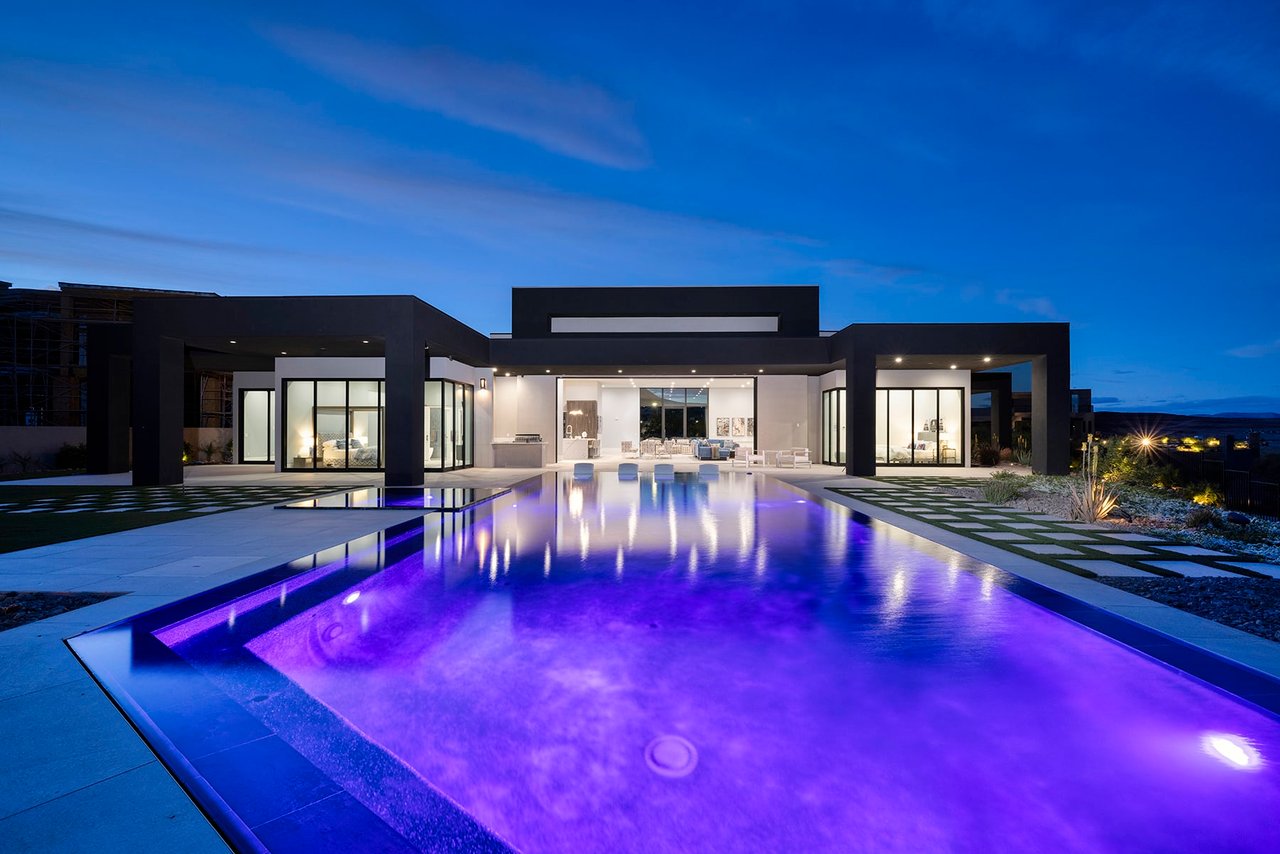
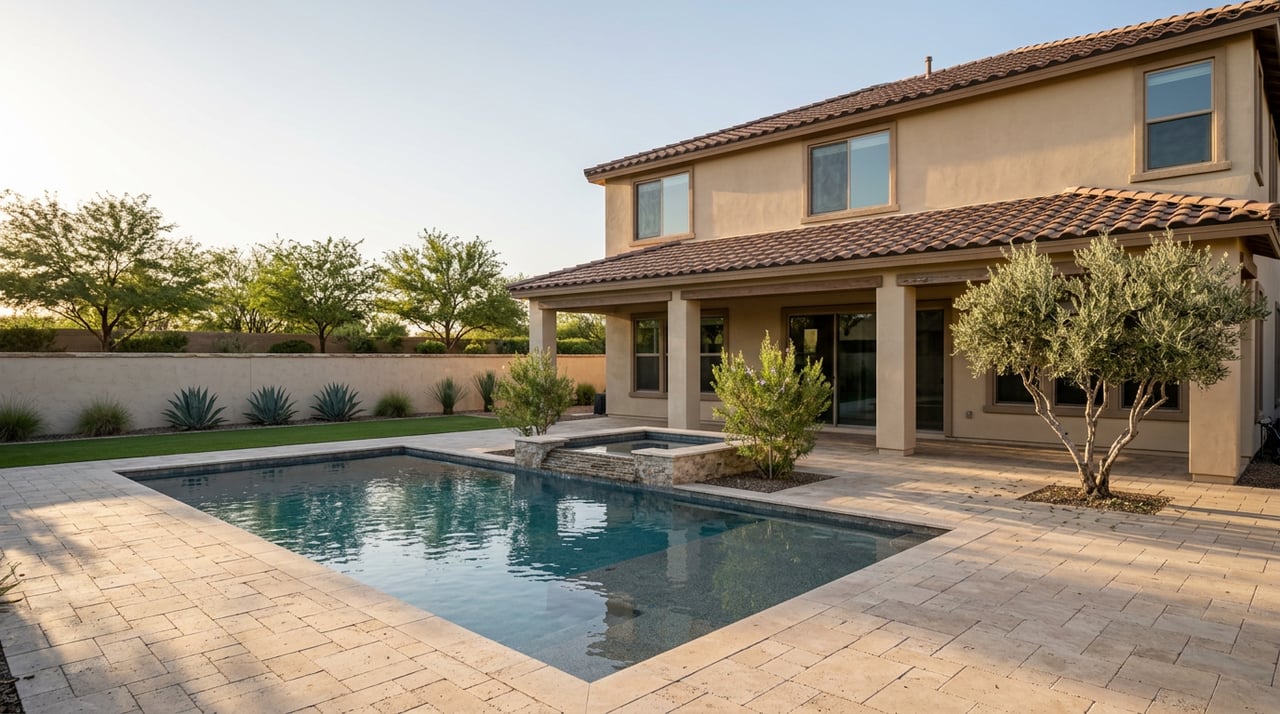
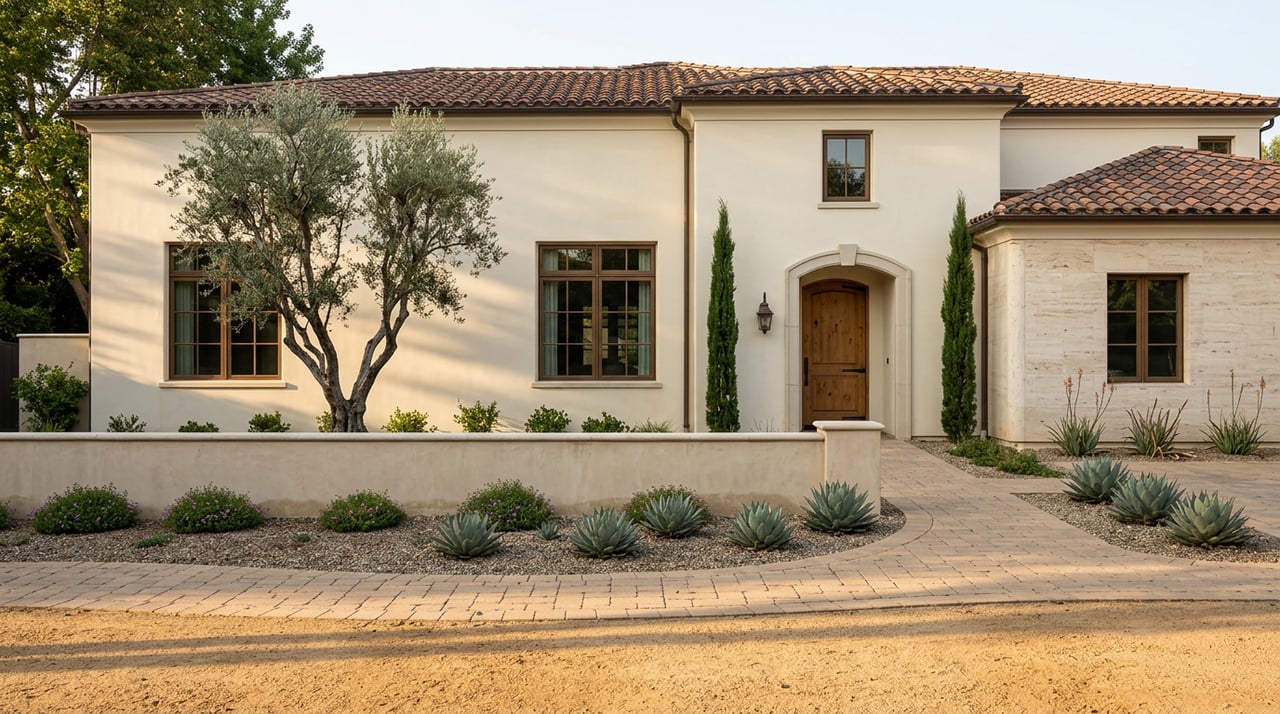
The homes themselves span a real range. Original-era construction from the late 1960s and 1970s sits next to estates that have been fully reimagined, and the difference between those two categories is the single biggest variable in what a given price actually buys.
Before writing an offer on an unrenovated original, a buyer should expect to budget for or at least closely inspect:
None of this is unique to golf-course real estate. It is unique to buying in a community old enough that the housing stock spans three generations of renovation, sitting on land that cannot be redeveloped, which is a very different risk profile than buying new construction where the finishes are current but the location has no comparable protection.
Location is the other half of the scarcity argument, and it holds up under scrutiny in a way marketing language often does not. The community sits roughly five minutes from the Las Vegas Strip via Desert Inn Road, about three minutes from the Las Vegas Convention Center, and roughly ten minutes from Harry Reid International Airport.
| Typical suburban golf community | Las Vegas Country Club | |
|---|---|---|
| Golf course future | Owned by an HOA or private operator with no permanent use restriction | Deed-restricted against redevelopment |
| Club access | Frequently bundled into HOA dues | Purchased separately from the home |
| Housing stock | Often built in a single continuous phase | Built starting in 1967, renovated in overlapping waves since |
| Commute to Strip and Convention Center | Varies, often 15 to 30 minutes | Roughly 3 to 5 minutes |
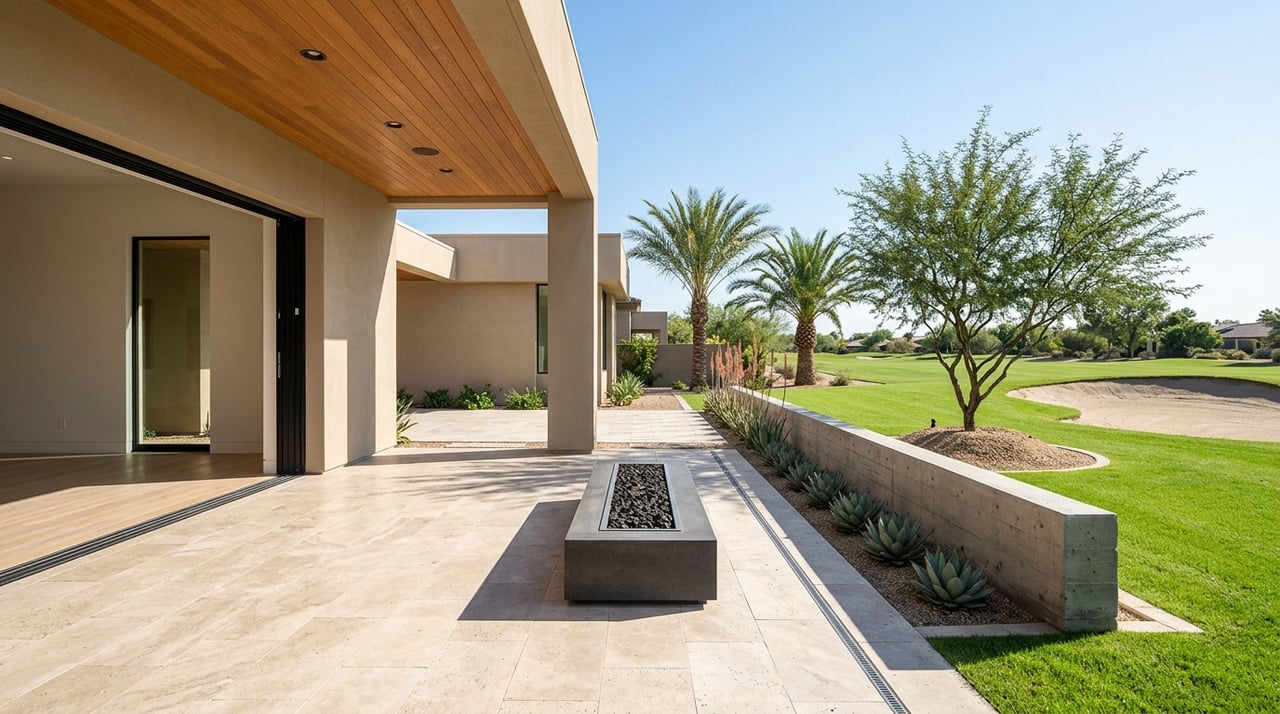
That combination, protected golf views inside a five-minute radius of the Strip, cannot be replicated by new construction. Every acre closer to the resort corridor is already spoken for. A newer community can copy the guard gate and the clubhouse amenities. It cannot copy the location, and it cannot promise what this deed already guarantees.
As of June 2026, homes here span roughly $400,000 for a home still awaiting its first major renovation up to $3 million or more for a fully reimagined golf-course estate, with a median time on market of about 50 days. That is not a sign of weak demand. It is closer to what you would expect when the buyer pool understands exactly what they are shopping for. A 50-day pace in a market this specific usually means buyers are taking the time to confirm renovation scope and club membership terms before committing, not that the neighborhood is struggling to find takers.
It is also worth remembering that the closest comparable address, the adjacent Scotch 80s, is a vintage luxury neighborhood without a gate or a golf course. Buyers sometimes treat the two as interchangeable because they sit side by side and share an era of construction. They are not the same purchase. One comes with a deed-protected fairway and a private club at the center of it. The other does not.
Does buying a home in Las Vegas Country Club include golf membership? No. Home ownership and club membership are purchased and priced separately. Confirm current membership availability, fees, and any waitlist directly with the club before making an offer if golf access is central to your decision.
How old is the housing stock, and does that affect financing or inspection? Most homes date to construction beginning in 1967, making the majority of original-era properties 55 or more years old as of 2026. Renovation scope varies widely between untouched originals and fully modernized estates, so a pre-offer inspection should prioritize roofing, HVAC, plumbing, pool equipment, and electrical systems.
Could the golf course ever be sold for development? A strict deed restriction protects the golf course from redevelopment regardless of future ownership changes at the club, which is not guaranteed at every golf-course community in the valley.
If you are weighing a home behind this particular gate against a newer guard-gated golf community elsewhere in the valley, the comparison is rarely apples to apples once you account for the deed, the separate membership structure, and the renovation math on a specific address. Gene Northup works with buyers and sellers across Southern Nevada's guard-gated and golf-course communities and can walk you through what a specific Las Vegas Country Club property actually requires before you write an offer. Get a free home valuation to start the conversation.

Real Estate Professional
Gene's knowledge of the real estate and financial markets in Southern Nevada, combined with his impeccable judgment and understanding of the unique needs of top-of-the-market buyers and sellers, make him an invaluable asset to his clients.
Stay up to date on the latest real estate trends.
With his ready smile and engaging personality, Gene is always eager to share his most interesting deal: yours. If you are looking for a premier representative for luxury real estate in Southern Nevada, look no further than Gene Northup.